
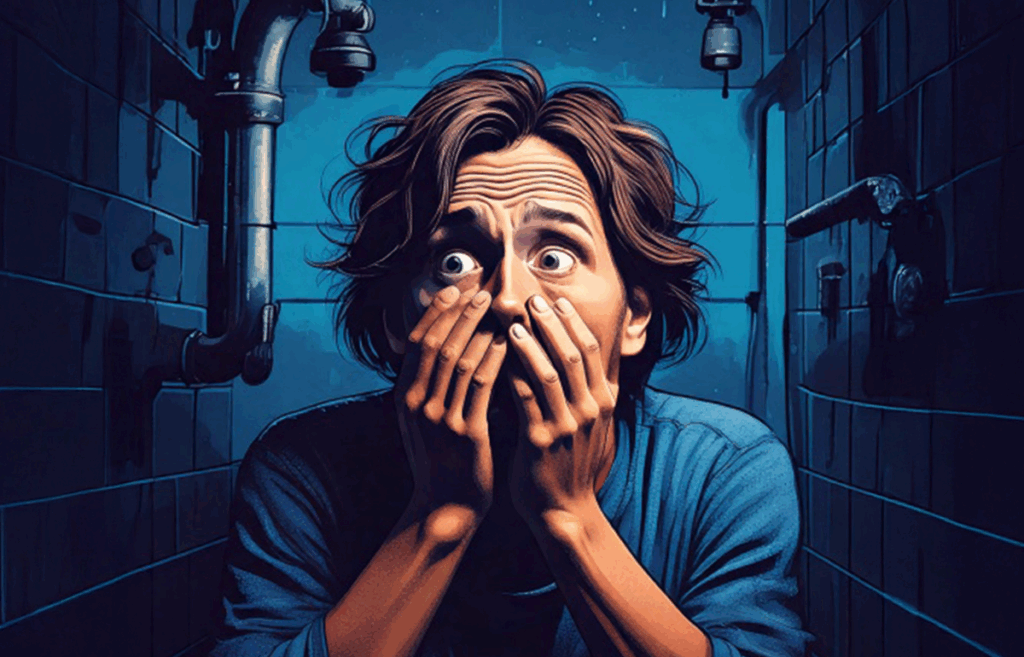
While a stinky drain or noisy toilet might not seem like a cause for concern right now, it can easily turn into a horror show if left to stew for too long.
Problems with a building’s pipes typically don’t just go away on their own. If they’re ignored for long enough, you could end up with property damage, expensive equipment repairs, as well as disruption to your operation.
Let’s take a closer look at these common commercial plumbing problems and what you can do to keep them at bay.
5 Common Plumbing Nightmares in Commercial Buildings
Here are the most common problems we see with commercial plumbing:
1. Clogged Drains & Toilets
One of the most common problems that bring plumbers out to a commercial property? Something is seriously clogged.
Unfortunately, no matter how many notices you put up or reminders you send, you can’t control what people put down your drains or toilets. In the case of something like a kitchen drain, grease and food particles may be the culprit. In the case of toilets, it could be caused by too much toilet paper or sanitary products.
While you may be able to get your commercial drain or toilet unclogged once or twice, if it keeps recurring, you should have a professional look at it. There’s likely a deeper problem not being addressed.
2. Leaking Fixtures
Leaks are another problem, though they’re not always easy to notice. A dripping faucet is something you can spot for sure. However, if the leak occurs somewhere deeper within your pipe line, the signs may not be as obvious. For example, if your water bill is sky-high and your water usage hasn’t changed, there is a high potential you have a leak in one or your pipes.
There are other signs that you have a broken or leaky pipe:
- Bulging spot on the wall or floor
- Discolored or flaky paint
- Smell of mildew or mold
An unchecked leak can lead to serious property damage. Even if water seems to be coming out of your fixtures without a problem, if you spot any of these other signs, it’s time to get your pipes inspected and fixed.
3. Water Pressure Problems
Fluctuations in your water pressure are definitely going to be noticeable. The thing is, these aren’t the easiest plumbing problems to diagnose and fix on your own.
For example, water pressure may have dropped because:
- The pipes or pumps are clogged up with sediment.
- There’s damage to your pipes.
- The water pressure regulator isn’t working correctly.
Low or no water pressure wherever it is — the shower, kitchen, lab, etc. — will negatively impact things for your tenants. If they’re complaining about the water pressure, you need to fix the problem fast.
4. Malfunctioning Water Heater
When people turn on the faucet or shower, they generally expect there to be a range of temperatures available. Hot water availability is critical for so many kinds of operations, too — from medical facilities to hotels.
Now, the most obvious sign that your water heater is on the fritz is that no hot water is coming out of your fixtures. In some situations, though, the hot water might just take longer than usual to get there. While that might not seem like a severe issue, it can lead to higher water bills and energy costs along with hot water shortages.
To fix this, you’re going to need the help of a pro to diagnose and fix the problem. Anything from a leak to sediment buildup can cause this kind of problem.
5. Blocked Sewer Lines
When the sewer lines in your building get clogged, everyone is going to notice. And so will their noses.
Blocked sewer lines may manifest similarly to clogged drains. You’ll notice that no matter how many times you run the garbage disposal or flush the toilet, the water keeps rising higher and higher. However, these kinds of blockages are often accompanied by really nasty odors and gurgling sounds, too.
To fix clogged sewer lines, your plumber will need to find the source of the problem. While it could come from a clogged pipe, it could also be due to the pipes being poorly installed. Outside sources (like tree roots) can also cause damage to pipes and block your sewer lines.
How to Keep Your Commercial Plumbing in Good Working Order
Inspecting and repairing issues with your property’s pipes as soon as they appear is critical. What might seem like a faulty water heater could turn into a complete loss of hot water very soon. So, there’s no time to waste.
Educating building tenants and visitors on proper use of the facilities is useful. Like posting signage about what can and cannot go down drains or toilets.
But it can’t solely be on them to keep your plumbing working in good condition.
Instead, schedule regular maintenance of your plumbing. This is the best way to minimize these types of problems and emergencies.
If you don’t have a commercial plumber you trust, give us a call at 316-688-1901. Or you can fill out this contact form and submit a service request today.