
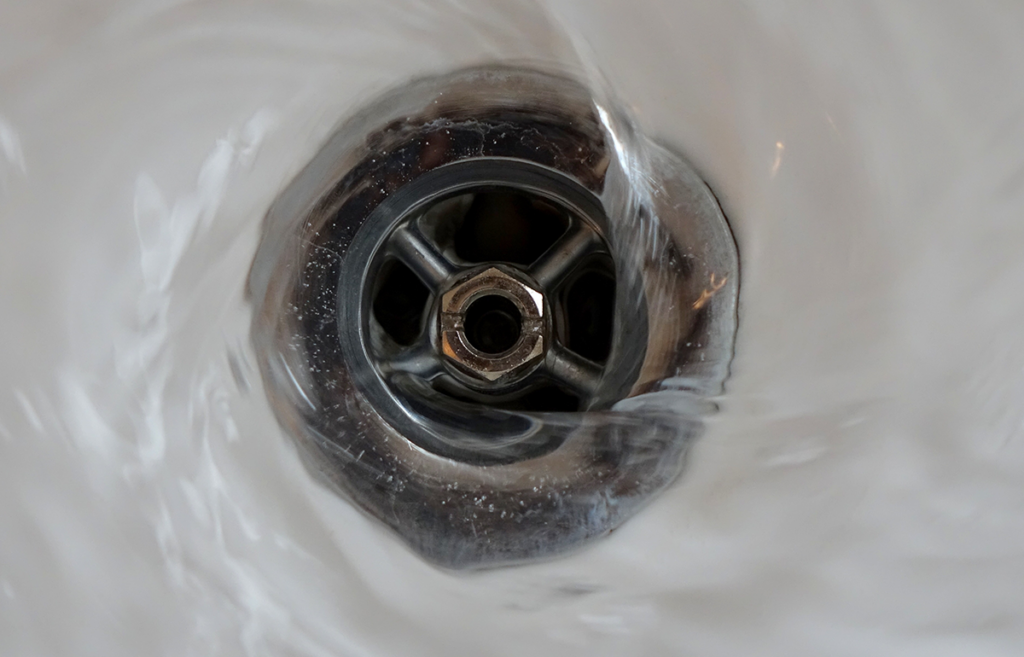
When your property has a backed-up drain, it could just be an annoying one-time clog. Someone put something down the drain that didn’t belong there, it got stuck, and now the water has nowhere to go but up.
There are other reasons why you could have a commercial drain backup and, more often than not, it requires a professional’s touch.
Let’s have a look at what you should do if there’s a backed-up drain in your building as well as tips for preventing this from happening in the future.
What to Do If Water Is Coming Up Through Your Drains
There are any number of reasons why water is moving the wrong way through your plumbing:
- Debris accumulated over time and created a blockage
- The sewer line is blocked
- A pipe has broken
- The plumbing vent and airflow are blocked
- There’s been significant rainfall or snow
- The building’s foundation has a crack
If someone dropped something into the drain they weren’t supposed to (like towels down a toilet), you may be able to remove the clog with a plunger or drain snake. (Do not use a chemical cleaner!)
However, if there wasn’t a direct action that resulted in the clog, if multiple drains are affected, if the area around the drain stinks, or your pipes are really noisy, you need to take more serious action now.
Here’s what you should do:
Call a Plumber
Have a quick look at the backed-up drain to get a general idea of what’s going on. When you call the plumber, explain which drain is impacted, how long it’s been blocked, and anything noteworthy about the blockage (smell, gurgling, color, etc.).
A single clogged drain might not seem like an emergency situation. However, it could very well be for the people who rely on it in your building.
If you don’t have a plumber that takes emergency calls, find one who does. Dean E. Norris, for instance, provides emergency commercial plumbing repairs.
In addition to providing a prompt response, our team will perform a comprehensive inspection of the area. We’ll look for the root cause as well as any damage that might not be as readily visible as the clogged drain is.
If you’re experiencing a plumbing emergency right now, call us at 316-688-1901.
Turn Off the Water Supply
If you can, turn off the water to the area where the drain is located. This step will reduce how much water is moving through your pipes from nearby water sources or appliances, and that may be contributing to the backup.
If the backed up water is starting to flood the area, this is an absolutely critical step to take.
Check Other Drains
To be on the safe side, inspect the drains throughout your property to see if there are any other backups. This includes:
- Sinks
- Toilets
- Tubs
- Basements
If you spot numerous backed-up drains, this is a more widespread issue that your plumber should know about. It will also determine which water source to disable. If the blockage is occurring in multiple places, you’ll need to shut off water at the main property valve.
Turn Off the Electricity
This isn’t necessary in every case. However, if you have a blocked drain that has flooded a significant amount of space, there’s a risk of it getting into your outlets or nearby equipment.
If you can safely reach the breaker box, turn off the electricity. If you cannot, evacuate the area and wait for the plumber to arrive. Be sure to notify them of the potential hazard so they can come prepared.
Clear the Space
Have a look around the space and move items out of the way or the room entirely to keep them from getting wet and to minimize damage.
For example, if you have a tub or toilet that’s backed up, you may need to remove rugs and appliances out of the way. In a place like the basement, there could be a lot more at risk of water damage.
It’s okay if you aren’t able to get everything out now. What’s most important is maintaining your safety and the safety of everyone else in your building. Your equipment, furnishings, and belongings can wait until the plumber arrives.
Contain the Water
If there’s no risk of entering the space where the water is backed up, try to clean up what you can.
You can use towels and buckets for minor water backups. This will prevent overflow while also mitigating mold growth. If your floor got wet, you can also bring in an air blower fan or dehumidifier to help dry it out.
How to Prevent Commercial Drain Backups in the Future
As you can see, a backed-up drain can become quite disruptive and destructive. Even if your drain isn’t overflowing and flooding the room, there’s a risk it could lead to that if left alone for too long.
To prevent this type of emergency from happening in the future, here are some things you can do:
- Post notices around drains that detail your policy about what can and cannot go down them.
- Add drain screens whenever possible to catch hair, food, and other debris.
- Pour hot water into your drains every month to try and clear out what’s in there and to test for possible issues.
Another good idea is to purchase a preventative maintenance plan through your HVAC provider or plumber. With this plan, your plumber will visit your site two or three times a year to inspect your pipes and plumbing. If things are starting to get backed up or there are other problems brewing, they’ll be able to find and repair them early.