
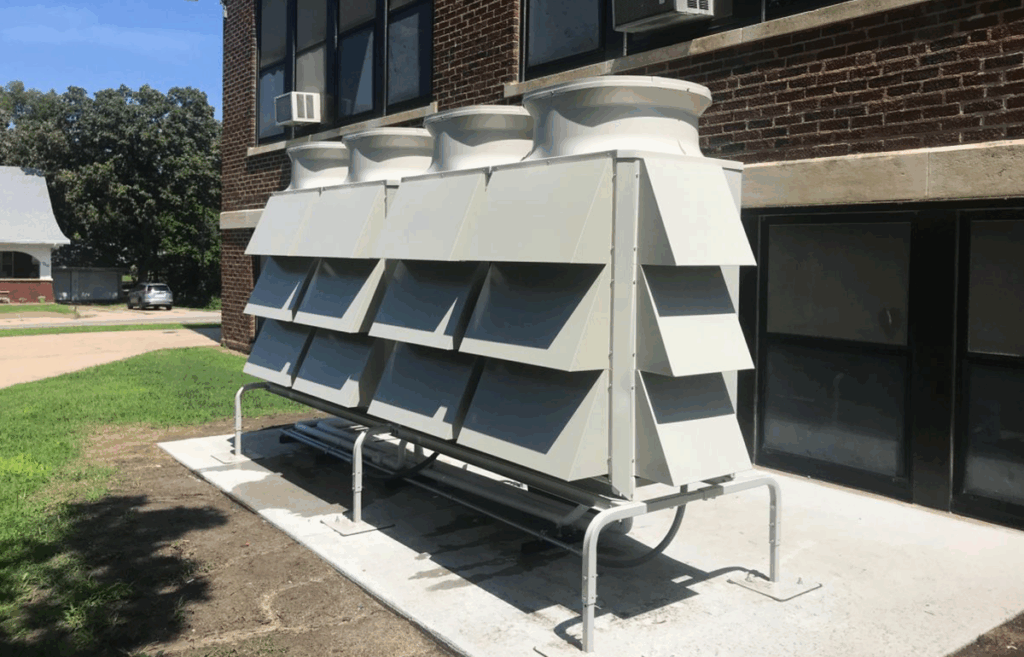
You may have seen Variable Refrigerant Flow (VRF) listed as one of the services on our website and wondered what it is. While heating and air conditioning may be more commonplace terms, they’re all related.
Curious to know if VRF is a better solution for your property than traditional ducted HVAC equipment? Keep reading.
What Is Variable Refrigerant Flow?
Variable refrigerant flow (VRF) is a ductless, high-efficiency form of heating, ventilation, and air conditioning (HVAC).
How does this differ from traditional HVAC solutions?
One of the biggest differences has to do with ducts. Traditional HVAC relies on ducts (or passages) to transport and remove air. VRF doesn’t use ducts at all.
Instead, VRFs flow refrigerant between outside and indoor units. As the refrigerant moves through inverter compressors, the flow of it changes based on the heating and cooling requirements.
Also, there are differences in the exchange units used to power the system. With traditional ducted HVAC, for every outside unit you have, there’s one inside. With VRF, though, there’s just one outside unit for multiple inside units.
VRF doesn’t require as many units because of the way the system works. Essentially, one unit can provide temperature control for an entire zone within a building. Not only that, VRF can heat and cool individual units simultaneously (as opposed to requiring separate ducts for different types of air).
The Benefits of VRF
There are many reasons why HVAC contractors like Dean E. Norris decide to install a VRF versus a ducted HVAC system:
- Flexible, zone-specific temperature control
- Energy efficiency
- Reduced utility costs
- Compact units for limited space
- Fewer units to manage and maintain
- Lower noise emission
If your building’s occupants struggle with it being too hot or cold, an efficient and easily controllable system like VRF could be the exact solution you need to improve their comfort. Also, if you’re looking to modernize and upgrade your HVAC system, VRF is a good choice.
Examples of VRF
Because of how flexible and space-efficient VRF is, you can realistically use it everywhere — from residences to commercial properties. That said, this large-scale HVAC system is a highly effective solution for properties with greater demands. For instance:
- Educational facilities
- Medical facilities
- Office spaces
- Retail locations
- Multi-family properties
Dean E. Norris has done countless VRF projects over the years. Most recently, we’ve done VRF installations for a couple of schools in the area.
When the water source heat pumps weren’t working at Liberal High School, the solution wasn’t to replace them with new ones. Instead, we took out the pumps, replaced them with VRF and added 20 outdoor units to the roof that would heat and cool 10 zones within the school.
At Marion-Florence High School, the problem was the boiler. Thankfully, it stopped working during a time of year when the school no longer needed to be heated. The issue still needed to be addressed, though, so we opted to replace the old HVAC system with a new VRF.
By the way, VRF is a good option if you have an older building that needs a modern HVAC solution. Installation isn’t as invasive as ducted HVAC, which can make it easier to retrofit an older property.
Would Your Building Benefit from a VRF?
Variable refrigerant flow systems can be incredibly beneficial when used at the right time and for the right place. This space-saving HVAC solution can help property owners save money while improving the comfort of their residents.
If you need an HVAC solution for your new property or you’re looking to replace or upgrade an existing one, give us a call at 316-688-1901. You can also use our contact form to explain your situation and let us know what you’re looking for.