
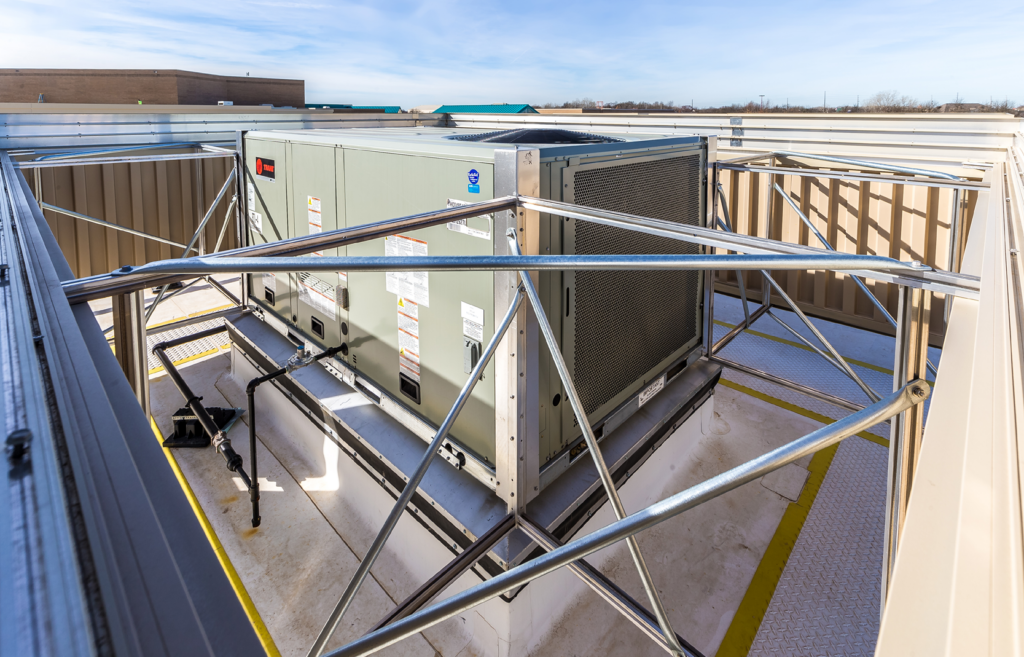
When your HVAC system is acting up, it’s easy to focus on the bits of it you can see — the thermostat, vents, boilers, etc. But for some businesses, the rooftop HVAC unit could be the culprit. Because of their exposure to the elements, these units are exposed to more wear-and-tear and can put the entire system in jeopardy if they’re not properly maintained.
If your building has a rooftop HVAC unit, keep reading. We’re going to explore why the commercial rooftop unit requires regular maintenance and what that work entails.
Why Commercial Rooftop HVAC Units Need Regular Maintenance
A rooftop unit (or RTU) is a weatherproof storage cabinet that contains the components of an HVAC system in one place. You’ll find fans, condensers, compressors, and even controls in there.
Here’s a photo of what RTUs look like on the rooftop of Derby High School:
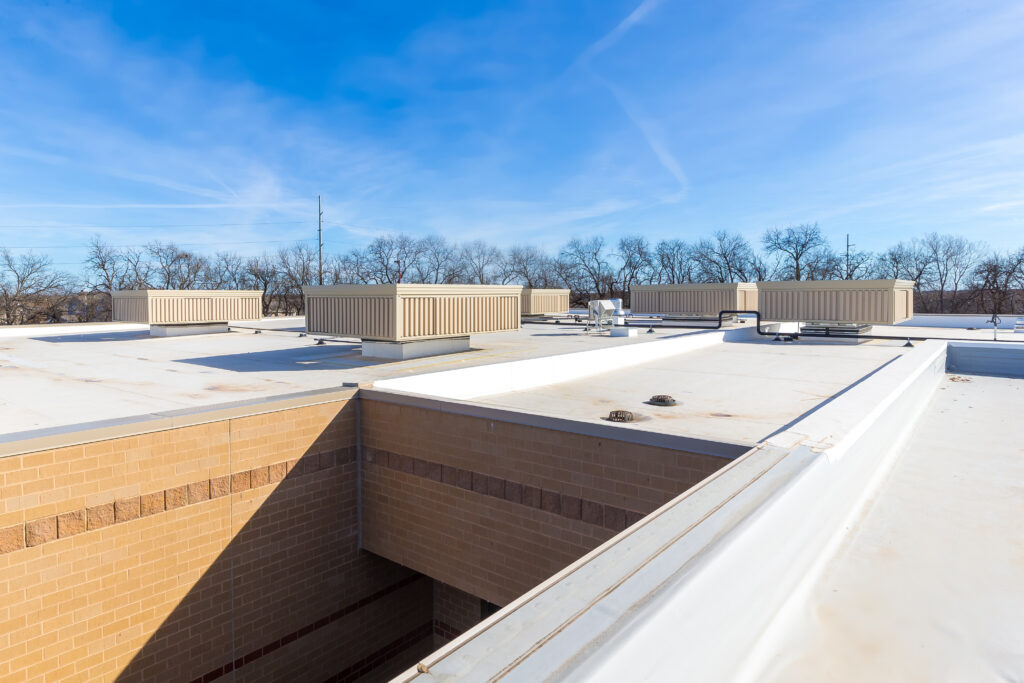
Because the RTU is located on the roof, it frees up space inside the property for other uses. At the same time, because of its location, it’s exposed to elements that you wouldn’t otherwise have to worry about indoors. For example, destructive storms, extreme temperatures, debris blockages, mold build-up, and pest infestations can all take their toll on an RTU.
This in turn creates problems like:
- Clogged filters
- Dirty coils
- Refrigerant leaks
- Corroded electrical connections
- Misaligned belts
- Drainage issues
- Malfunctioning safety controls
If the RTU gets forgotten or ignored for too long, these issues can lead to inefficient heating, cooling, ventilation, and energy consumption. It can also lead to total component failure and very uncomfortable conditions indoors (if people choose to remain in the building at all). What’s more, it can create unsafe conditions inside your property.
The commercial HVAC services we provided to Humboldt High School are a good example of why RTU maintenance is essential.
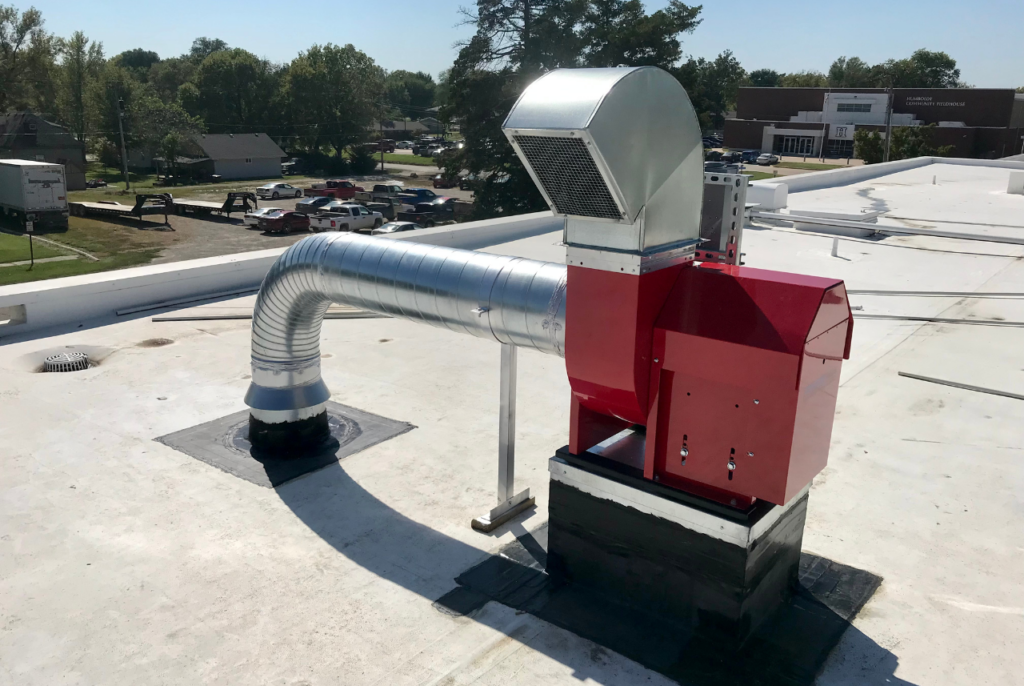
While we installed a top-of-the-line ventilation system to improve air quality within the school, regular maintenance is needed to keep it and the rest of the building’s mechanical equipment running at peak efficiency.
What HVAC Rooftop Unit Maintenance Entails
To keep your HVAC running efficiently, rooftop unit maintenance involves a series of inspections, adjustments, and repairs. Common tasks include the following:
- Inspect the unit for cracks or leaks
- Remove obstructions around the RTU
- Clean or replace filters
- Clean evaporator and condenser coils
- Top off refrigerant levels
- Clear condensate drain lines
- Lubricate fans
- Replace worn belts and pulleys
- Test electrical connections
- Test burner and ignition system
- Test motors and fans
- Test thermostat operation
- Evaluate other performance indicators
By performing HVAC rooftop unit maintenance, you can keep these systems running in tip-top shape throughout the year. And the more frequent the maintenance is, the quicker you (and we) are to catch problems before they become catastrophes.
The Benefits of Commercial RTU Maintenance
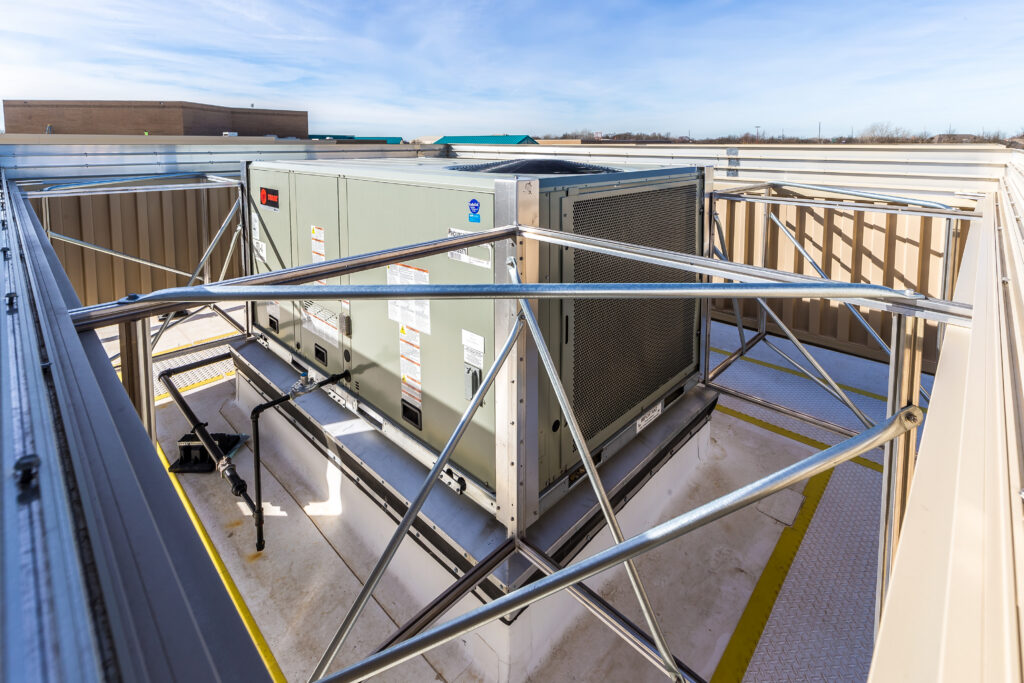
If you have a rooftop unit, an HVAC preventative plan is a smart investment. With regularly scheduled proactive and preventative maintenance, you’ll enjoy the following benefits:
- Improved system efficiency
- Improved indoor air quality and comfort
- Decreased likelihood of emergencies and downtime
- Longer HVAC equipment lifespan
- Lower HVAC-related costs
In addition, your HVAC partner will take the burden of remembering to inspect and repair your RTU off of your plate. When you sign up for preventative maintenance, we schedule two or three visits a year to ensure your system remains reliable and to head off any issues before they become full-blown emergencies.
If you’d like to learn about our commercial HVAC preventative maintenance plan, fill out the form at the bottom of the page and we’ll contact you with more information and pricing.